WE NEED THE LIGHTS ON
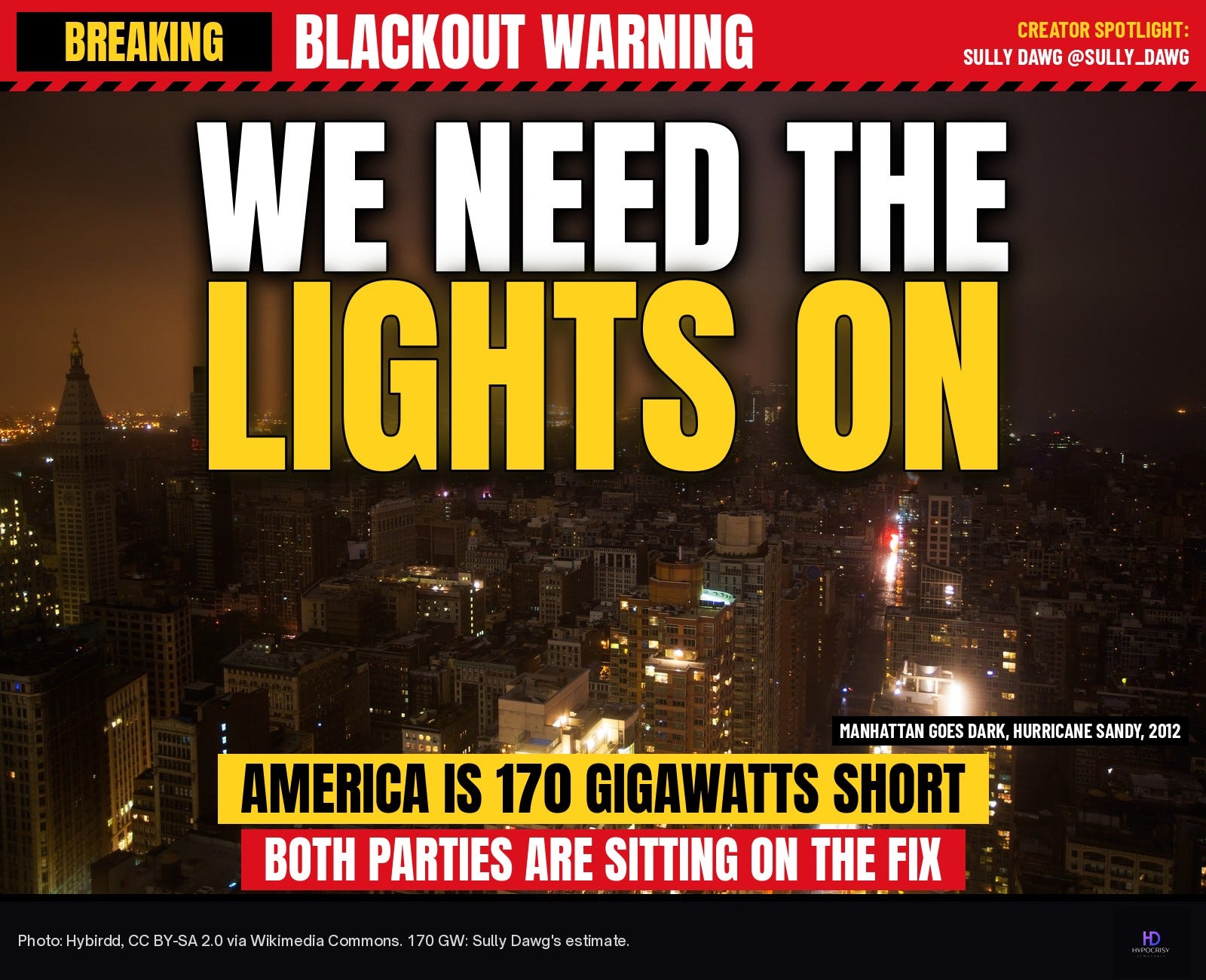
Creator Spotlight. Video and explainer by Sully Dawg (@sully_dawg). This piece is built on his Oct. 22 video, America’s Electricity Crisis: We’re 170 Gigawatts Short (also on TikTok). The video, the cups and the explainer are his work and belong to him. Find all of his channels and his source lists on his Linktree and SullyDawg.com.
Quick question for you. When was the last time Democrats and Republicans agreed on anything that would actually lower your electric bill? Sully Dawg, a former high school and college teacher who explains policy with stacks of cups, found one. Then we went looking for the catch. There are two, and each party owns one.
The cup math
Sully’s setup is simple. In 2025, America added 53 gigawatts of new capacity, the biggest single year since 2002, per the U.S. Energy Information Administration. That’s his pyramid of solar, batteries, wind and natural gas cups. Then he puts up a much bigger target: about 700 gigawatts needed over the next decade. “If we repeat our record 10 times in a row, we’re still 170 gigawatts short,” he says. Those are the black cups.
The 53 is solid. The math is right: 10 record years is 530, and 700 minus 530 is 170. The 700 is the soft cup. We could not match it to one published forecast. ICF projects 445 gigawatts of new generation from 2026 through 2030 alone, and the OpenMinds Grid Vision Plan says the grid needs 800 gigawatts of added capacity by 2035, counting transmission, storage and flexible demand. So the ballpark holds. Treat the exact 170 as a cup-stack illustration, not a federal statistic.
His line on why we can’t be picky yet: “Nobody wants to run their house on a generator forever.” His list is solar, wind, storage, transmission and natural gas, for now. Translation for both parties: your favorite fuel is not enough by itself.
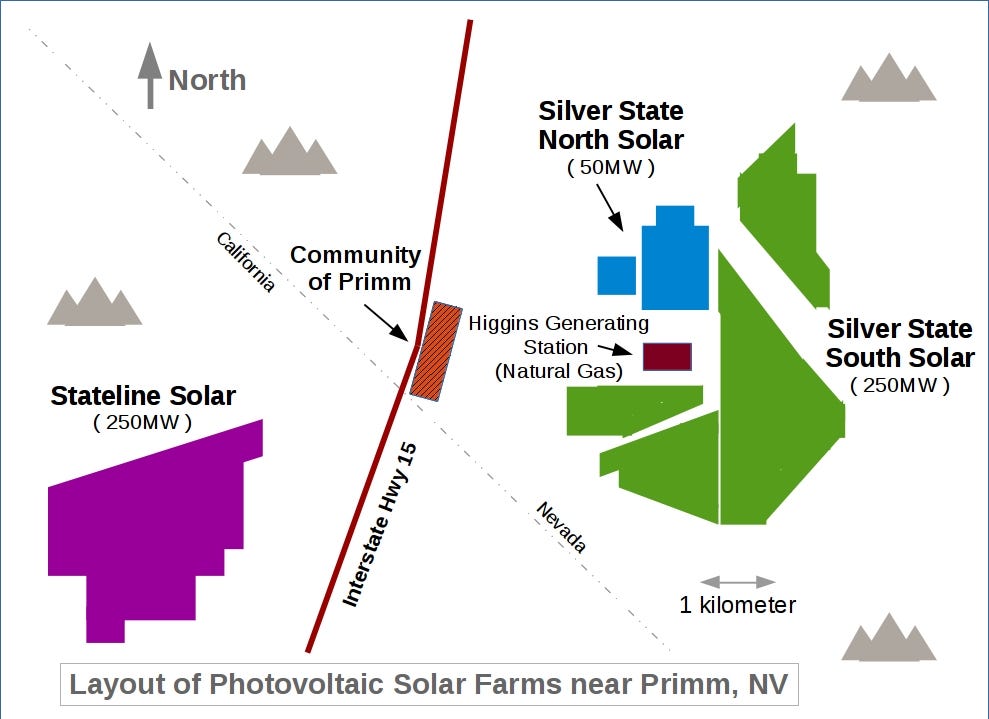
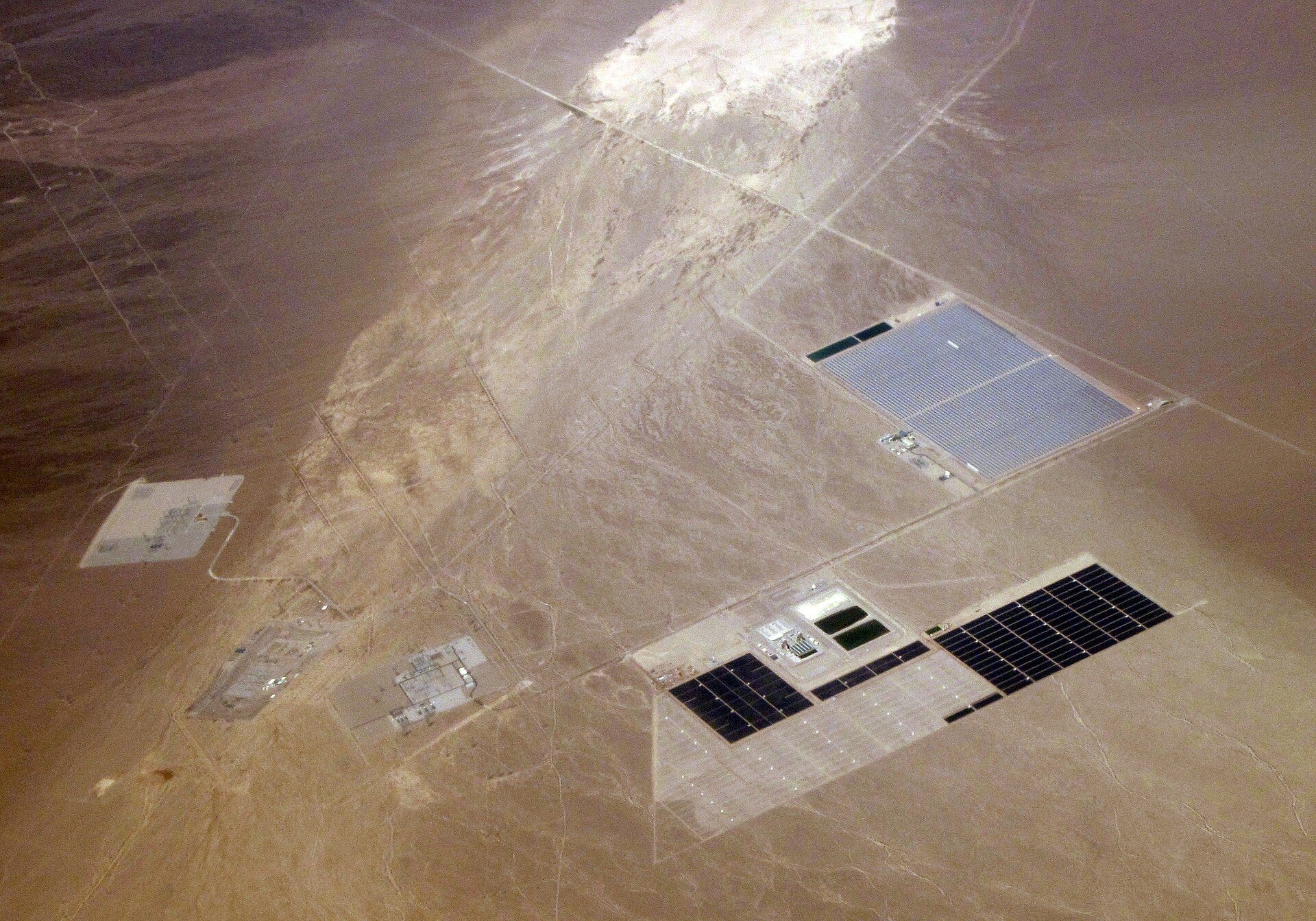
Three utility-scale solar farms near Primm, Nevada. Credit: Bikesrcool, CC BY-SA 4.0 via Wikimedia Commons.
The bill he wants you to know about
The plan Sully points to is the Bipartisan American Affordability and Jobs Act of 2026, S. 5653, introduced Sept. 30 by two Republicans, Shelley Moore Capito and Mike Lee, and two Democrats, Sheldon Whitehouse and Martin Heinrich. He gets the big pieces right:
- Faster federal reviews. The bill sets deadlines, including 60 days to decide whether an application is complete and 45 days for a record of decision after a final environmental impact statement, per a Covington & Burling analysis.
- Certainty. Permitted projects keep their permits “absent extraordinary circumstances, violations of law, or court order,” per Capito’s office.
- Data centers pay. Sully: “Data centers would pay their own transmission costs, not families.” The bill requires loads of 20 megawatts or more to carry their own transmission costs and bars shifting them onto other customers.
Where he simplifies: he says environmental review and tribal consultation remain. They do, and Heinrich says tribes keep the ability to “formally consult.” But review gets narrower. The bill limits who can sue, puts many challenges on a 150-day clock, standardizes most comment periods at 45 to 60 days and shortens Endangered Species Act consultation from 90 days to 60. Whether that is “streamlining” or “gutting” depends on which side of the courtroom you usually sit on.
His timing is right too. Senate leaders are targeting a Nov. 9 vote, six days after Election Day.
Sempra Energy’s El Dorado combined cycle power plant, which runs mostly on natural gas, near El Dorado, Nevada. Credit: Doc Searls, CC BY 2.0 via Wikimedia Commons.
Republicans: “all of the above,” except the cheap stuff
Here is the part the video skips. The party that loves to say “energy dominance” spent a year sitting on its own power supply. In July 2025, Interior Secretary Doug Burgum required his personal sign-off on every wind and solar project on public land. Heinrich’s January letter called it “a de facto moratorium” and quoted President Trump on Truth Social: “We will not approve wind or farmer destroying Solar.” In April, a federal judge blocked those Interior policies for the wind and solar industry groups that sued.
Now that the White House wants this bill, the wind farms are suddenly less scary. The Pentagon just cleared projects in Maine and South Dakota as a show of good faith. The promise covers some 30 of roughly 300 wind projects stuck in Pentagon review, per Bloomberg. Whitehouse’s review: “It’s a start, but we are going to need to see a lot more from the administration on wind and solar.” You can’t run on high electric bills and also keep the cheapest new power in a desk drawer.
Democrats: the perfect moment never comes
Democrats don’t get a pass. This is not the first try. In 2024, a permitting bill cleared the Senate Energy Committee 15 to 4 and never got a floor vote in either chamber, as Third Way notes. The same center-left think tank warns that Democrats “may be tempted to stall on permitting reform for the perfect political moment.” Meanwhile, the party’s green allies are holding out again. “While NRDC is encouraged by the transmission provisions, other elements of the bill are deeply flawed,” the group wrote, per Latitude Media. The Sierra Club hasn’t endorsed either.
Their worry is fair. The same “project certainty” Democrats demanded to protect offshore wind from Trump could also protect oil and gas projects from the next Democratic president. But a party that says climate is an emergency can’t treat every transmission line like a hostage.

Data centers among commercial buildings near Ashburn in Loudoun County, Virginia. Credit: Theodore Christopher, CC0 via Wikimedia Commons.
Compromise isn’t surrender
Sully’s closer is the best line in the video: “It’s not perfect, but it’s a good deal.” And: “Compromise isn’t surrender.” You don’t have to agree with every page of S. 5653 to agree with the teacher on the basics. Demand is rising, the old pace is not enough, and families should not pay for a tech company’s power lines.
WE NEED THE LIGHTS ON, and both parties have spent years finding reasons to leave them off. Sully asks viewers to tag their senators. We’d add: ask yours how they’ll vote on Nov. 9, and what their excuse is if the answer is “not yet.”
Go follow Sully Dawg. He’s on YouTube, TikTok, Instagram and X, and he posts his sources at SullyDawg.com. Plain talk and cups beat most cable panels.
We covered AI’s power-hungry politics in The pause button has a donor and energy prices in Don’t Hit Diesel. See who funds your senators on the Money Map and electoral map.
Receipts
- Sully Dawg, “America’s Electricity Crisis: We’re 170 Gigawatts Short,” YouTube, Oct. 22, 2026; same video on TikTok. Quotes are from the video’s captions. His sources: Bipartisan Policy Center fact sheet and Third Way, both linked on his Linktree.
- U.S. Energy Information Administration. 53 GW added in 2025, the most since 2002.
- ICF Energy Demand Growth Report 2026 and OpenMinds Grid Vision Plan. Capacity projections used to check the 700 GW figure.
- Congress.gov, S. 5653. Sponsors, Sept. 30 introduction, status.
- Capito press release, Sept. 30, 2026 and Senate Energy Committee release. Permit certainty, data center costs, tribal consultation.
- Covington & Burling, Inside Energy & Environment, Oct. 16, 2026. Deadlines, litigation limits, ESA timing, 20 MW load rule, Nov. 9 target.
- Latitude Media, Oct. 23, 2026. NRDC and Sierra Club withholding support; Nov. 9 vote.
- Sen. Heinrich letter, Jan. 23, 2026. Burgum directive; Trump Truth Social quote.
- Reuters, April 21, 2026. Judge blocks Interior’s wind and solar policies.
- Bloomberg via World Oil, Oct. 22, 2026. Pentagon wind clearances; Whitehouse quote.
- Earlier Hypocrisy Democracy: The pause button has a donor; Don’t Hit Diesel. Reader tool: Money Map and electoral map.
Upgrade
Paid readers pick 1 meme sticker from the Etsy shop HypocrisyDemocracy, plus quarterly sticker packs, discounts and bonus content.
If you haven’t subscribed, now’s a good time. Everything here stays free, always. But pieces like this take days of research, writing, and fact checking, and if you’d like to support that work, paid subscriptions are there. Thank you for your support!
Thanks for reading, sharing, and commenting. And thanks to Sully Dawg for the cups.
Subscribe. Donate. hypocrisydemocracy.net. Hypocrisydemocracy@pm.me.
Originally published on Substack.
 Donald TrumpPresident of the United States
 Sheldon WhitehouseU.S. Senator (RI)
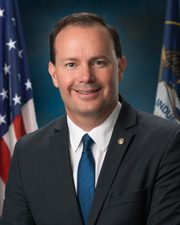 Mike LeeU.S. Senator (UT)
 Barry MooreU.S. Representative (AL-01)
 Blake D. MooreU.S. Representative (UT-01)
 Gwen MooreU.S. Representative (WI-04)
 Martin HeinrichU.S. Senator (NM)
 Riley M. MooreU.S. Representative (WV-02)
 Shelley Moore CapitoU.S. Senator (WV)
 Tim MooreU.S. Representative (NC-14)